
Thunder Championship Odds: OKC’s Title Case Is Bigger Than SGA
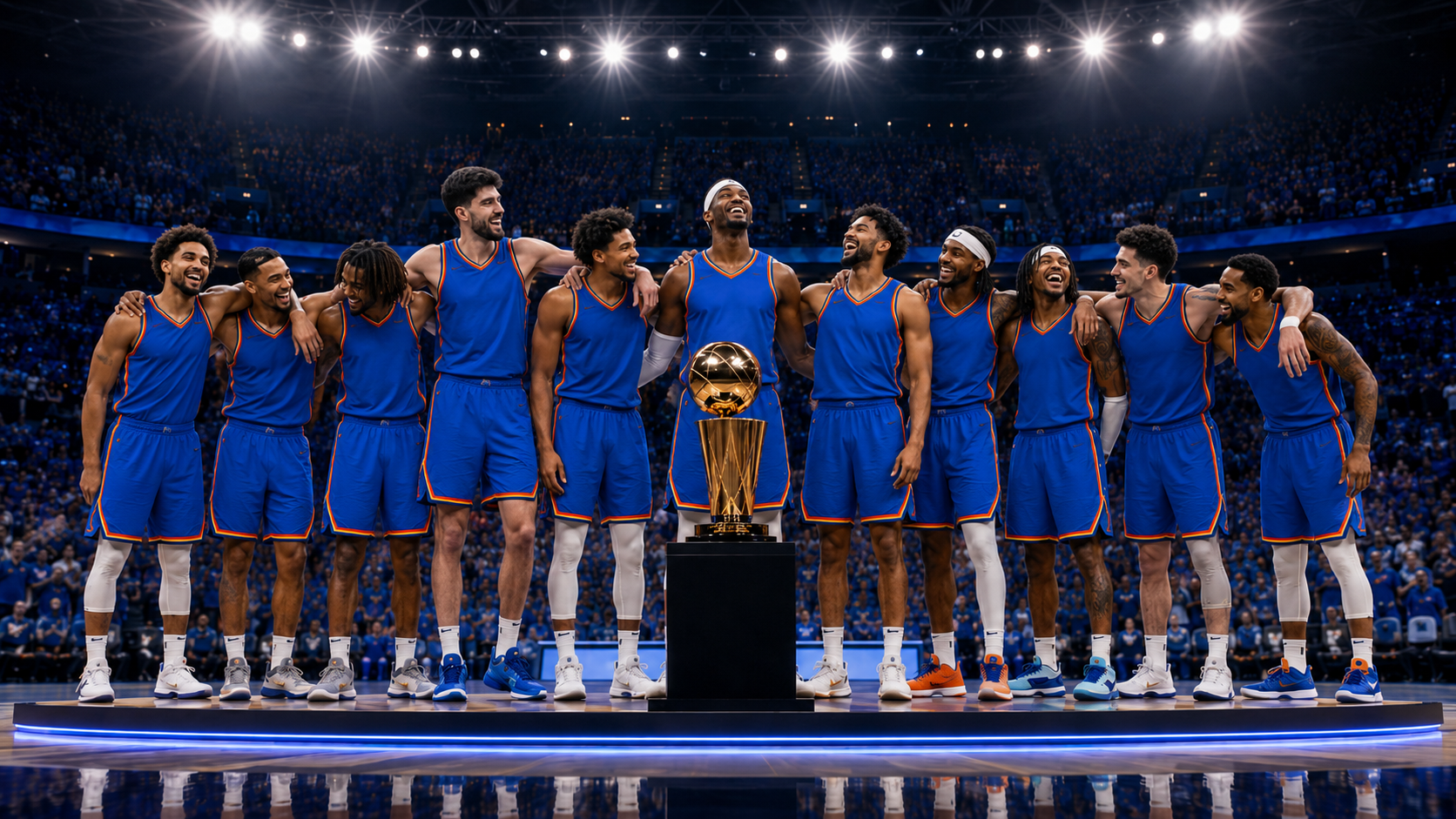
Oklahoma City’s title case starts with Shai Gilgeous-Alexander, but this playoff run has not been a one-man show.
The Thunder are tied 2-2 with San Antonio after a rough 103-82 Game 4 loss, and SGA has not fully taken over the Western Conference Finals by his usual standards. He scored 19 in Game 4, 26 in Game 3, and has spent the series seeing different coverages as the Spurs adjust how much help they send at him. San Antonio’s latest answer was to stop over-doubling, keep more defenders attached to OKC’s shooters, and force the players around SGA to beat them through contested looks rather than rhythm threes. It worked: Oklahoma City shot 33% from the field and 6-for-33 from three in Game 4.
That is the tension in OKC’s +101 championship price on Novig. SGA is the reigning MVP and still the player most likely to define a Thunder title. But the reason Oklahoma City remains favored in the West at -174 is not just SGA. It is the full roster: Alex Caruso’s shotmaking and defense, Cason Wallace’s pressure at the point of attack, Chet Holmgren and Isaiah Hartenstein taking turns battling Victor Wembanyama, and enough two-way depth to keep winning even when the MVP is not dropping 35 every night.
What the Thunder’s Championship Odds Mean
Oklahoma City at +101 is basically sitting on the edge of favorite territory. The implied probability is just under 50%, which makes sense for a team still tied 2-2 in the West but priced as the most complete roster left on the board.
The -174 series price says the Thunder are still favored to get through San Antonio. That is not because Game 4 looked good; OKC scored 82 points, turned it over 20 times, and got held to 18.2% from three. The price is about the larger sample: home court, SGA, roster depth, and the belief that the Thunder can solve the Spurs’ latest defensive adjustment before the series gets away.
The Finals MVP market tells the same story from a different angle. SGA at +108 is almost priced like a co-favorite with the Thunder title itself, while Chet Holmgren is all the way out at +2532. If Oklahoma City wins the championship, SGA is still the clear narrative leader. The team structure is why the Thunder can survive rough stretches, but the MVP award path still runs through him.
How Oklahoma City Got Here
The Thunder have won in this series through depth, pressure, and collective shotmaking more than pure SGA dominance.
Game 1 was the first warning sign that OKC’s supporting cast could swing games even in a loss. Alex Caruso erupted for a career-high 31 points on 11-of-19 shooting and 8-of-14 from three, nearly stealing the opener despite Wembanyama’s 41-point, 24-rebound masterpiece.
Game 3 was the best version of the Thunder’s team case. Oklahoma City beat San Antonio 123-108 behind a massive bench performance, with its reserves outscoring the Spurs’ bench 76-23. That 76-point total was the highest bench-scoring mark in modern conference finals history, and SGA did not need to force the issue: he finished with 26 points and 12 assists while the roster around him did the heavy lifting.
Then Game 4 flipped the script. The Spurs stopped sending the same aggressive help at SGA, stayed home on shooters, and dared the rest of Oklahoma City to create tough offense. The Thunder could not answer. That one-game failure does not erase the first three games, but it does explain why this series is now much more fragile than the +101 title price might look at first glance.
The Series Problem
The Spurs’ Game 4 adjustment was not simply “stop SGA.” They used Stephon Castle and extra length to make SGA work without opening every kickout, which forced Oklahoma City into late-clock creation and lower-quality threes. SGA scored 19, the Thunder shot 6-for-33 from deep, and OKC’s supporting cast failed to repeat the Game 3 avalanche.
The injury piece matters too. Jalen Williams and Ajay Mitchell have both been part of the broader concern around Oklahoma City’s rotation, and if either returns closer to full strength, the Thunder get more shot creation, more defensive options, and more ways to punish San Antonio for loading up on SGA. Without that help, OKC’s margin gets thinner because the Spurs can keep turning the series into an SGA containment puzzle.
That is why the Thunder’s -174 series price feels fair but not comfortable. They still have home court and the better full roster, but San Antonio has the most disruptive player in the series and a defensive plan that just produced a 21-point win.
The Path to the Finals
Oklahoma City’s path is still the most balanced one in the field.
Against San Antonio, the job is obvious and miserable: make Wembanyama work without letting everyone else breathe. Chet Holmgren and Isaiah Hartenstein give OKC two different big-man looks, while Caruso can dig, rotate, and disrupt passing angles without completely abandoning shooters. Nobody is “stopping” Wembanyama, but the Thunder have at least made parts of the series difficult for him by showing size, contact, and help from multiple places.
The rest of the Spurs also have to be managed. Castle, De’Aaron Fox, Devin Vassell, and the supporting shooters can punish overreaction, so Oklahoma City cannot spend the entire series staring at Wembanyama. That is where OKC’s roster build helps. The Thunder can guard up, rotate across positions, and still keep enough offense on the floor.
If Oklahoma City reaches the Finals, the Knicks are the likely opponent. That matchup gives the Thunder a strong personnel case. Cason Wallace and SGA are both equipped to defend Jalen Brunson in stretches, and OKC can throw different bodies at him without wrecking its offense. Brunson will still get to his spots, but Oklahoma City has more point-of-attack resistance than Cleveland has shown in the East finals.
The frontcourt matchup is also workable. Chet was the Defensive Player of the Year runner-up, and Hartenstein gives OKC a bigger body to compete with Karl-Anthony Towns on the glass and in the post. Towns can stretch either big away from the rim, but the Thunder can answer with mobility, help timing, and enough perimeter pressure to make New York work deep into possessions.
Cleveland is the less likely Finals opponent, but the matchup would be even more direct for SGA. The Cavaliers have size with Evan Mobley and Jarrett Allen, but their guard defense is vulnerable. Brunson has repeatedly targeted James Harden in the East finals, and SGA would be able to hunt similar matchups with more length, more patience, and a deeper passing network around him.
Why the Thunder Can Win It All
The Thunder can win the championship because they have the best blend of star power, defensive versatility, and roster balance left. SGA is the top of the pyramid. Even in a series where he has not fully erupted, his gravity is still shaping every possession. San Antonio’s defensive adjustment is proof of that. The Spurs had to change how they guarded him, and that opened the next layer of the matchup: whether the rest of Oklahoma City can punish the attention.
The supporting cast is the real differentiator. Caruso’s Game 1 shotmaking showed how fast he can swing a night. Wallace has been a defensive menace, especially when OKC needs a guard who can fight over screens and make ball-handlers feel pressure before the action starts. Holmgren and Hartenstein give the Thunder frontcourt options that most teams do not have, especially against Wembanyama and, potentially, Towns.
The shooting matters too. Oklahoma City’s role players had been making the Spurs pay from three before Game 4, including a Game 3 performance where the Thunder hit 17 of 38 from deep and got a playoff-high 18 points from Jaylin Williams. That is the version of OKC that looks like a champion: SGA making the right reads, the defense flying around, and the bench burying open shots.
What Could Derail the Thunder
Game 4 showed the blueprint.
If San Antonio can guard SGA without overhelping, the Thunder have to create from secondary actions, contested threes, and role-player decision-making. That is a lot easier at home than on the road, but it is still the right pressure point. OKC’s offense can look machine-like when the ball is moving. It can look much smaller when the first advantage does not arrive.
Wembanyama is the other problem, and he is not going away. He had 41 points and 24 rebounds in Game 1, then 33 points, eight rebounds, five assists, three blocks, and two steals in Game 4. Holmgren, Hartenstein, and Caruso can make him work, but there are possessions where the coverage is fine and Wembanyama still breaks the math.
The Thunder also need the role-player shooting to return quickly. Game 4’s 6-for-33 from three is not likely to repeat exactly, but cold stretches against San Antonio are dangerous because Wembanyama turns missed shots into transition pressure, rim deterrence, and momentum swings. If OKC loses the three-point math again in Game 5, the series price will move fast.
Are the Thunder Worth Trading at +101?
Oklahoma City at +101 is the most straightforward contender trade on the board. The Thunder are not cheap, but they are priced like a team that still has the best overall title profile despite a tied conference finals.
The case for taking OKC is depth, because SGA does not need to score 40 for the Thunder to win. Caruso can swing a game, Wallace can change a matchup defensively, and Holmgren and Hartenstein give them options against elite size. The bench has already shown it can decide an entire conference finals game.
The case against OKC is that the Spurs may have found a sustainable defensive plan. If San Antonio can keep SGA around the mid-20s, stay attached to shooters, and let Wembanyama dominate the paint, the Thunder’s team advantage gets much harder to feel. The injury situation also matters because Oklahoma City’s depth is only a title edge if the right pieces are available.
At +101, the Thunder are for traders who believe Game 4 was a correction point, not a turning point. If OKC’s role players start hitting again and SGA gets even slightly more comfortable, the Thunder can still look like the best team left very quickly.
Trade Thunder Championship Markets on Novig
Oklahoma City is tied 2-2 with San Antonio, priced at -174 to win the West and +101 to win the championship. SGA’s +108 Finals MVP price captures the star part of the bet, but the roster around him is why the Thunder remain so dangerous.
The path is not easy. Wembanyama is the hardest individual matchup left, the Spurs just changed the series defensively, and the East will bring either Brunson’s half-court shotmaking or Cleveland’s size. But OKC has the most balanced roster left, with enough two-way players in the backcourt and frontcourt to match up with every remaining opponent.
Get your Thunder championship positions on Novig.
Disclaimer: Odds are accurate as of May 25 at 3:00 p.m. ET and may move before tip-off. Always check current prices and market rules on Novig before placing any bet or trade.


